 Image licensed by ConnectWise
 Image licensed by Ingram Image/StockPhotoSecrets
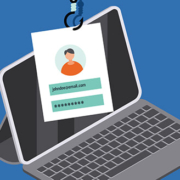
5 Red Flags Of Phishing Emails: Think Before You Click
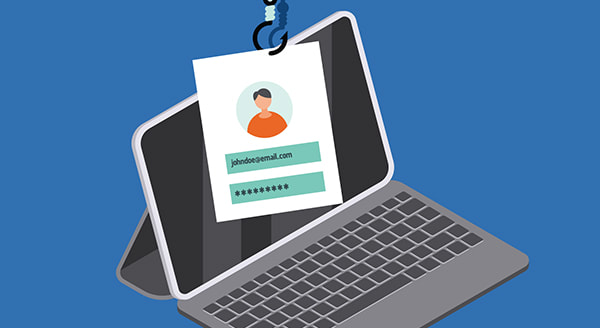
A single click can be the difference between maintaining data security and suffering massive financial losses. From the moment just one employee takes the bait in a phishing email, your business is vulnerable to data breaches and extensive downtime.
Quickly spot the red flags and put phishing emails where they belong!
Discuss securing your business against costly phishing attacks at (651) 686-0515 or fill out our contact form!
1. Poor Spelling & Grammar
While occasional typos happen to even the best of us, an email filled with errors is a clear warning sign. Most companies push their campaigns through multiple review stages where errors are blitzed and language is refined. Unlikely errors throughout the entire message indicate that the same level of care was not taken, and therefore the message is likely fraudulent.
2. An Offer Too Good To Be True
Free items or a lottery win sure sound great, but when the offer comes out of nowhere and with no catch? There’s definitely cause for concern. Take care not to get carried away and click without investigating deeper.
3. Random Sender Who Knows Too Much
Phishing has advanced in recent years to include ‘spear phishing’, which is an email or offer designed especially for your business. Culprits take details from your public channels, such as a recent function or award, and then use it against you. The only clues? The sender is unknown – they weren’t at the event or involved in any way. Take a moment to see if their story checks out.
4. The URL or Email Address Isn’t Quite Right
One of the most effective techniques used in phishing emails is to use domains which sound almost right. For example, [microsoft.info.com] or [pay-pal.com].
Hover over the link with your mouse and review where it will take you. If it doesn’t look right, or is completely different from the link text, send that email to the bin.
5. It Asks For Personal, Financial or Business Details
Alarm bells should ring when a message contains a request for personal, business or financial information. If you believe there may be a genuine issue, you can initiate a check using established, trusted channels.
While education is the best way to ensure phishing emails are unsuccessful, a robust spam filter and solid anti-virus system provide peace of mind that your business has the best protection available.
Discuss securing your business against costly phishing attacks at (651) 686-0515 or fill out our contact form!
Could Your Backups Survive A Ransomware Attack?
More and more businesses and organizations are getting stung by ransomware demands. Hospitals, schools, social networks . . some days it seems like an epidemic that leaps around arbitrarily, and hackers are raking in millions.
Tallied across the world . . . billions.
Ransomware attacks are devious in their simplicity. A user in the target business is tricked into opening a file, usually through a phishing email or download. The file contains malware which instantly encrypts your data and demands money in exchange for the password.
No Payment = No Password = No Data
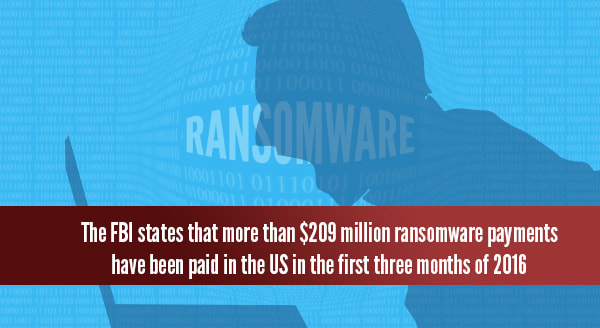
All of the target businesses should have backups, which they could simply revert to without paying any money, but the FBI reports more than $209 million was sent to hackers in the first quarter of this year alone. Keep in mind, this was just payments within the US, and only counts those who came forward.
Last year it was only $25 million.
Aren’t Backups Helping?
Sometimes the backup solution fails and the data can’t be retrieved. This is particularly true in cases where the solution has been in use for years and something failed along the way.
In other instances, the target business has a backup that can be restored, but it doesn’t include everything they need for full recovery.
Finally, and the most common reason so many businesses are forced to pay the ransom: the ransomware attack affects the entire system – including attached and synchronized backups. If the backup is also caught in the ransomware encryption, it becomes useless as a recovery method and the only options are to pay or lose the data forever.
Each day spent trying to recover the data is a drain on valuable business resources and in many cases, results in massive revenue loss.
The only defense is to block the malware before it can infect the first workstation, and then continue the protection with a comprehensive backup strategy for all workstations and servers.
Discuss securing your business against ransomware at (651) 686-0515 or fill out our contact form!
10 Reasons To Upgrade To Microsoft 365 Today
With an upgrade to Microsoft 365, businesses are finally getting the changes they actually want! It’s still Office, and your staff will still know exactly how to use it, but they’ll get so much more done.
1. The Mac / Windows Drama Is Over
Microsoft 365 brings with it a stack of benefits, but perhaps the most relieving is the built-in file compatibility across all platforms. No more converting (or corrupting) files back and forth, and productivity black holes have essentially been eliminated.
2. Always Ready To Go
Microsoft is so confident in its cloud-based software and data storage that they’re giving a 99.9% uptime guarantee. You can even call a real-life human for support (like the team at Sovran). Work online, offline or mobile – the choice is yours.
3. Built-In Security
A large part of Microsoft’s uptime certainty comes from their extremely robust security protocols. Microsoft 365 offers enterprise-grade admin controls at your end, as well as government-grade security at their end.
4. Generous Data Allowances
Each user gets 1 TB of cloud space for file storage, which can be shared at the folder or file level. For some perspective, 1 TB can hold approximately 85 million pages of Word documents.
5. Work Anywhere, Anytime
Previously, staff needed to establish a VPN or manage security concerns to do their tasks while offsite, which made working difficult and cumbersome. Microsoft 365 has solved that problem, and working from anywhere is now easy!
6. Integrated Organization
Calendar, email, and contacts are all synced and updated across multiple devices: laptop, desktop, and mobile.
7. Huge Mailbox Storage
Forget the days of ‘user mailbox is full’ – each user is given a whopping 50 or 100 GB in a gorgeous, easy-to-use mailbox.
8. Built-In Malware & Spam Protection
Data security doesn’t stop at file storage: each email is scanned for malware and spam, protecting your organization from all manner of attacks before they happen.
9. Collaboration Tools & Virtual Meeting
Cancel your third-party services and bring all your collaborations into one platform – meeting schedule, calendar, malware protection, video conferences, planning, and more.
10. Integrated Team Planning
Schedule tasks, meetings and track allocations from a top-down level to know exactly how projects are progressing.
Upgrade To Microsoft 365 Today
Talk to us about your Microsoft 365 migration and setup today at (651) 686-0515 or fill out our contact form!

Businesses: Replace Copper POTS Communications Lines Now
A shift in telephony years in the making is nearly here: Plain Old Telephone Services (POTS) are shutting down in August.
Copper telephone lines, which mostly serve businesses fax machines, fire alarms, security alarms, emergency phone systems, and other legacy systems, will need to be updated or replaced by August 2, 2022, according to FCC Order 10-72A1.


FCC Order 10-72A1
In 2019, the FCC issued Order 19-72A1 that removes protections that allowed services like POTS to continue being used. This order removed those protections after a three-year period, which expires on August 2, 2022.
With less than five months until copper wires must be completely phased out, small businesses, rural businesses, those who use fax machines, copper-based fire and security alarms, and more need to be prepared to plan and act accordingly. If they don’t, they may run into major problems at the end of this summer.
 POTS Replacement Solutions
The team at Sovran, led by President Traci Leffner and vCIO Shonn Twight, is ready to help you avoid problems with the switch from copper. Our excellent engineers are ready to help your business maintain lines of communication and safety.
We know it’s painful to change equipment, but fiber and coaxial lines may be cheaper than copper in some cases.
Talk with our team today at (651) 686-0515 or fill out our contact form to get ahead of the curve and find the best solution for your business.

3 Types Of Cyberattackers Putting Business at Risk
Cyberattacks and data breaches happen worldwide, and no one is immune. Your business needs to protect its networks and systems, and secure sensitive data.
But how much do you know about the types of cybercriminal out there? This roundup discusses the biggest threats and what they’re after.
1. Cybercrime Gangs
Online crime is a lucrative industry. Cybergangs go online to offer “crime as a service.” Their targets vary and can be spread out globally.
In 2019, one international crime gang stole $100 million from more than 40,000 victims. Culprits were found in the US, Bulgaria, Germany, Georgia, Moldova, and Ukraine. Victims included small businesses, law firms, international corporations, and nonprofits.
Many of these bad guys may have started out in the digital environment, but well-established street gangs are turning their attention to cybercrime too.
Typically well-funded and -organized, cybergangs work long-term to mount large-scale attacks. They target banks, law firms, healthcare networks, and other big businesses.
Still, small businesses can be targeted by cybercrime gangs. You could be the first domino to compromise a larger, more lucrative target in your supply chain.
2. State-based Actors
One nation pays an individual or group to target another country. On the digital battlefield this could mean:
- tampering with an election;
- infiltrating another country’s banking system;
- compromising critical infrastructure;
- accessing intelligence;
- creating incidents of international significance;
- engaging in propaganda or disinformation campaigns; and,
- espionage.
Australia recently announced a “sophisticated state-based cyberattack” on political and private-sector organizations.
State actors also used cyber techniques to damage Iran’s nuclear program. They left an infected thumb drive in the parking lot. A well-meaning staffer found the USB and plugged it into the facility computers. The virus caused Iran’s fast-spinning centrifuges to go into overdrive.
These attackers are often motivated by nationalism, but this doesn’t mean businesses are safe. A politically motivated cyber actor might target a hotel hosting an international convention or gain access to a government vendor to send false communications.
3. Lone Wolf
Also known as disorganized crime, this is the online equivalent of a petty thief. Many make their income stealing money from low-hanging targets.
Some Lone Wolves are only interested in proof-of-concept: hacking into businesses and governments to see if it’s possible, without doing any damage once they are inside.
3 Types Of Cyberattackers Putting Business at Risk
Now that you better understand why your business might be targeted, it’s time to take the necessary steps.
A managed service provider can help solidify your cybersecurity stance. Our experts can set up email security, remote access management, anti-malware scanning, and more.
Talk to us about your cybersecurity options today at (651) 686-0515 or fill out our contact form!

4 Advantages of Managed IT over In-House IT

It’s tempting to hire an in-house IT technician to take care of your network and set them up with a cozy office just down the hall, but is it the right decision for your business?
If you’re like most businesses, you’re always on the lookout for ways to save money while improving results. Sometimes this means expanding your staff to include a team of tech specialists at your beck and call, but this can often be an unnecessary expense that leaves you with highly paid employees twiddling their thumbs all day.
For SMEs who are looking for the best of both worlds, we recommend Managed IT services.
Put simply, Managed IT is our solution which gives you that team of specialist technicians and network experts, without the ‘quick, look busy’ element – and at a fraction of the cost.
Naturally, you’d rather see your IT budget working to support your growth and kept as low as possible. That’s our focus too, and why we don’t simply maintain and repair your systems, we proactively monitor to avoid downtime and work with you to ensure your IT increases productivity and efficiency.
Whether you already have in-house IT and are auditing the value, or are curious about what having IT support might be like for your business, we’ve put together a few factors to consider before making your choice:
1. Availability
Most employees work 9-5, but what happens if something goes wrong with your systems outside these hours? Your in-house technician won’t appreciate being woken at 1am and called in for emergency repairs. It’s more likely that they simply won’t answer the call (or hear it), or if they do, expect some hefty contract renegotiation come 9am.
Managed IT is very different as we expect problems after hours and have support technicians ready. We know that every minute of downtime is affecting your revenue, plus your business reputation, so we prioritize getting your systems up and running asap. As a bonus, with our Managed IT these types of disasters are rarer as we’re constantly monitoring and
2. Total Cost
One of the things that may have attracted you to having an in-house technician is the cost. But while you may be able to pay them a lower hourly rate, there are extra costs like hiring, training, ongoing training, healthcare and retirement.
Once you start adding up the cost of an in-house technician, you might find it’s eating up your IT budget and leaving you scrambling to fill gaps you didn’t expect. Upgrades get delayed, opportunities missed, and IT expenses become a sore point. In comparison, Managed IT is one fixed monthly rate delivering enormous value, including access to specialists across all software applications and technology.
3. Ongoing Training
Putting aside the fact your technician will often spend entire weeks away upgrading their skills and leaving you scrambling for support while they’re gone, those training costs quickly add up. With a salaried technician, you’ll have to pay all ongoing training and certification costs, plus travel costs for industry conferences.
We know how important it is to remain current, certified and skilled in new technologies, so we spend the money to invest in ourselves so we can serve you better. We’re part of industry related communities and attend multiple conferences each year, all at our own expense.
4. Different Goals
sFor most employees, a higher wage is the goal and many will job-hop to achieve that. A salaried tech may be looking for the first opportunity to leave and get paid more, often leveraging all the training you’ve just provided.
In these modern times, switching jobs regularly is expected, with an average of only 3 years in each position. Considering how much it costs your business to acquire, train and upskill your technician, 3 years is an unreasonable ROI. Our goals couldn’t be more different – we only aim to keep you a happy customer for as long as we can!
4 Advantages of Managed IT over In-House IT
In the end, your business needs to find the right balance between profit and expertise. When you partner with our Managed IT, you’re securing availability, ever-increasing expertise and commitment to your success. We work closely with you to provide the very best support and protect you from costly disasters, taking preemptive action to keep you safe and operational.
There’s no doubt Managed IT is a better decision than hiring an in-house technician, and we’d be delighted to prove it to you.
Talk to us about your Managed IT options today at (651) 686-0515 or fill out our contact form!

Avoiding Growing Pains — Tech Tips for a Thriving Business

Maybe you started your business in a basement or home office. It was just you at the beginning. Then, your service or product gained traction. The number of staff grew, and you moved into an office. It’s amazing how far you’ve come. Better still, your business continues to grow. It may be time to consider some of these tech tips to help your thriving business.
1. Upgrade to Business-Grade Cloud Services
Perhaps you’ve been relying on free software from Gmail, Outlook, or Dropbox. Who can argue with free email, calendars, collaboration and file storage right? Well, it may be time to upgrade to the business versions of the software your team relies upon.
Move from Gmail to Google Apps, or Outlook to Microsoft 365, or Dropbox to Dropbox Business. For a small monthly fee, you gain business-grade features.
The basic Google Apps offers business email, video and voice conferencing, secure team messaging, shared calendars, 30GB cloud storage and document, spreadsheet and presentation creation. Plus, you gain greater security and administration controls. Right now, a disgruntled employee could refuse to give up control of a business account.
You’d be out of luck. With Google Apps, your business would control all accounts and could simply reset the password.
Or Dropbox Business provides added storage space and user activity and sharing auditing. Unlimited file recovery and version history make recovery easier. A remote wipe feature protects files on a stolen device).
2. Revise Your Backup Strategy
A consumer grade backup setup was enough when you were only dealing with one computer. Now that you have many computers, it’s worth enhancing your backup strategy.
With 3-2-1 backup, your business has a minimum of three backups. Two would be onsite (but separate from one another) and the other offsite. We recommend the cloud. Having your backups in a unified location helps efficient recovery if disaster strikes. With cloud backup, your data is encrypted for storage in the cloud. You can set parameters for how often data is backed up and confirm that it is backing up correctly. Then, if something does go wrong, you can access essential data from anywhere, anytime via the cloud.
3. Consider Cloud-based Accounting Services
Traditional small business accounting software requires a large database on the desktop computer. As more people need access to the database, the problems start. With multiple people accessing the accounting software:
- The network can slow when people try to access it remotely
- Changes can’t be made while someone else is in database
- Data can get mismatched depending on who has the “newest” version
Cloud-based accounting packages address these challenges. With online accounting software, it’s easy for your business to scale. Business owners can connect to the data from any device with an Internet connection. Plus, in the event of a disaster, productivity won’t suffer as the information is safe and secure on the cloud.
4. Outsource Your IT
Your expanding technology allows you and your staff to do more than ever before. Great. But it also takes extra resources to monitor, manage, and secure it all. By outsourcing IT, your business gains IT expertise. Meanwhile, your in-house IT team can focus its efforts on driving growth.
Outsourcing IT also provides long-term cost savings by reducing downtime, cutting infrastructure costs, and improving security to avoid costly cyber-attacks.
Keep your business growth in check with an eye out for value-adding initiatives.
Talk to us about your cloud services options today at (651) 686-0515 or fill out our contact form!