How Remote Monitoring Helps Businesses Catch IT Issues Earlier
IT problems don’t always start with an obvious failure. A device may slow down over time. A server may show warning signs before it affects employees. A network issue may appear in small interruptions before it becomes a larger disruption.
When these issues go unnoticed, they can affect productivity, security, customer service, and daily operations. Employees may not report a problem until it slows their work. By then, the issue may already be affecting more systems than expected.
Remote monitoring helps businesses catch IT issues earlier. It gives an IT team better visibility into systems, devices, networks, and performance concerns so they can respond before a small problem becomes more disruptive. If your organization is interested in remote monitoring for a stronger cybersecurity environment, contact Sovran online or call (651) 686-0515 to get started.
Remote Monitoring Supports More Stable Operations
Business stability depends on technology that works consistently. Email, internet access, file storage, business software, phones, printers, and cloud systems all support daily work.
Remote monitoring helps track the health of these systems. It can alert IT teams when issues need attention, such as unusual device behavior, network instability, storage issues, failed backups, or systems not updating correctly.
This matters because many IT issues are easier to manage when they’re found early. A warning sign can often be addressed with less disruption than a full outage. The goal isn’t to eliminate every possible problem. The goal is to reduce surprises and give the business more control.
Small Problems Can Affect Larger Systems
A single IT issue can have a greater business impact when it affects other systems. A slow network connection may affect cloud applications. An outdated device may pose a security risk. A backup failure may not seem urgent until data needs to be restored.
Remote monitoring helps identify these smaller issues before they spread or create unnecessary risk. It also helps IT teams understand whether a problem is isolated or part of a broader pattern.
For example, if several employees are experiencing slow access to the same application, the issue may not be with individual devices. It may point to an issue with a network, server, or cloud service. Better visibility helps the support team respond more accurately.
Monitoring Helps IT Teams Respond More Efficiently
Without monitoring, IT support often relies on employees to report problems only after they notice something is wrong. That approach can work for simple issues, but it isn’t enough for systems that need consistent performance.
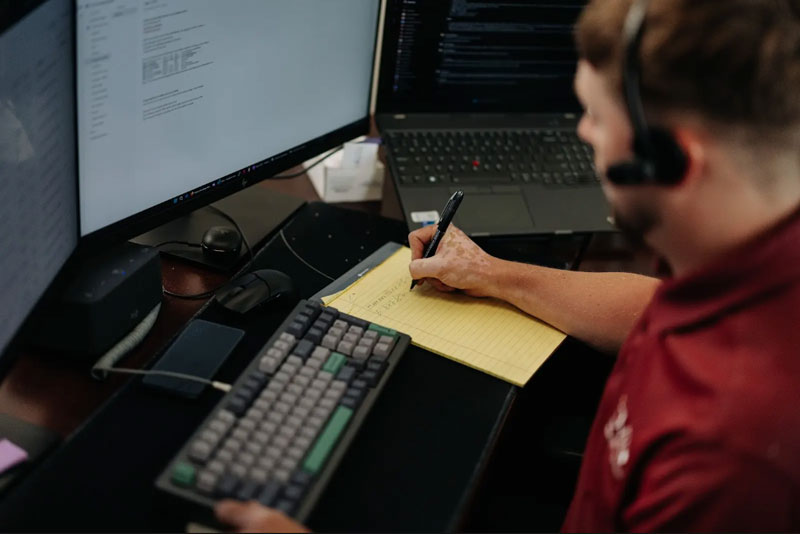
Remote monitoring gives support teams more information before they begin troubleshooting. Instead of starting from scratch, they may already know which system is affected, when the issue began, and whether related alerts have appeared.
That can make support more efficient. It can also reduce back-and-forth with employees who may not know how to describe the problem. When IT has clearer information, employees can often get back to work faster.
Remote Monitoring Is Useful Across Locations
Many businesses no longer operate from one central office. Employees may work from multiple locations, remote offices, client sites, or home offices. That creates more opportunities for technology to fail or become inconsistent.
Remote monitoring helps businesses keep better visibility across these environments. It can support offices, devices, servers, networks, and cloud-connected systems without requiring someone to be physically present every time an issue needs review.
This doesn’t replace on-site support when needed. Some problems still require hands-on work. But remote monitoring can help determine when an issue can be handled remotely and when a technician needs to be involved.
Security & Performance Often Overlap
Remote monitoring is often discussed in terms of uptime and performance, but it can also support security. A system that’s missing updates, behaving unusually, or showing repeated errors may need review before it creates a larger concern.
Monitoring can help identify issues such as failed updates, device health problems, backup failures, unusual activity, or systems that are no longer performing as expected. These signals don’t always indicate a security incident, but they can point to areas that need attention.
Security and performance are closely connected. A stable IT environment is usually easier to protect. When systems are monitored and maintained, the business has a stronger foundation for managing risk.
Alerts Need the Right Process Behind Them
Remote monitoring is only useful when alerts lead to the right action. Too many alerts can create noise. Too few can leave important issues unnoticed.
A practical monitoring process should define what is being watched, which alerts matter most, who reviews them, and what happens when action is needed. This helps the business avoid both overreaction and neglect.
Good monitoring also improves over time. As the IT team learns more about the environment, alert settings and response processes can be adjusted. The goal is to focus attention on issues that affect stability, security, and business operations.
Reporting Helps Leaders See Patterns
Remote monitoring can also give business leaders better insight into recurring technology issues. Reports may indicate recurring device issues, network instability, backup issues, or systems that require replacement or additional support.
This information can help with planning. Instead of making IT decisions only when something breaks, leadership can see where investment may reduce future disruption.
Clear reporting also helps connect technology work to business outcomes. It shows how monitoring supports uptime, employee productivity, risk reduction, and long-term planning.
Build a More Stable IT Environment With Sovran
Remote monitoring helps businesses catch IT issues earlier, reduce disruption, and maintain better visibility across systems and locations. It supports more efficient troubleshooting, stronger planning, and a more stable technology environment.
The most effective approach combines monitoring with responsive support, regular maintenance, security review, backup planning, and clear communication.
Sovran helps businesses use remote monitoring as part of a steady managed IT strategy. From system visibility and issue response to planning and ongoing support, Sovran helps organizations keep technology working with less disruption and more confidence. If you’re interested in partnering with an expert cybersecurity partner, contact Sovran online or call (651) 686-0515 to start the conversation.